The Star Falls at Yubi: Gao Huan's Last Stand
546 AD | Eastern Wei · Gao Huan vs Western Wei · Wei Xiaokuan
I. A 100,000-Strong Army at the Gates
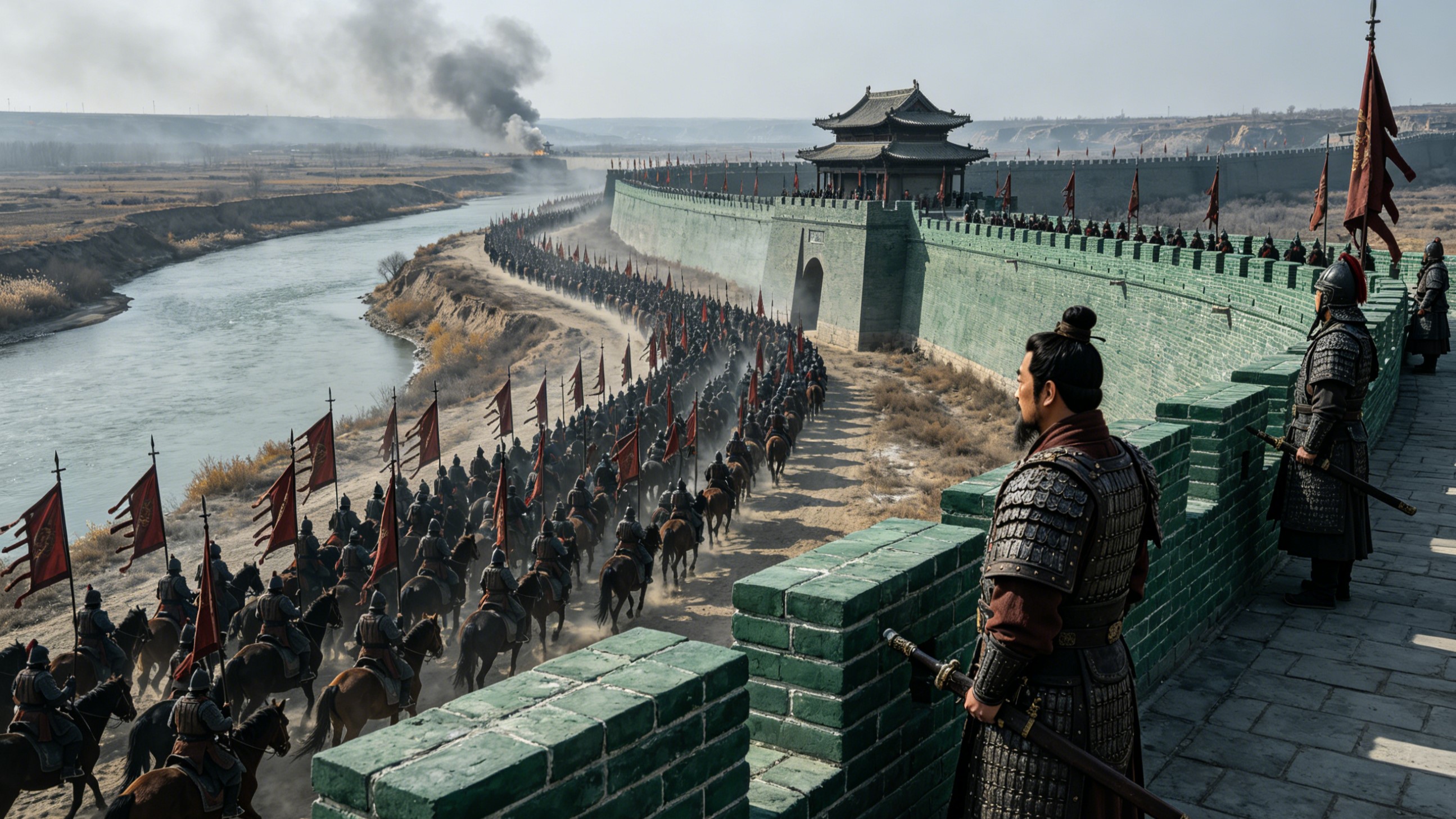
In the late autumn of 546 AD, the wind howling through the Fen River valley carried a bitter chill. Gao Huan, the powerful minister of the Eastern Wei, stood on the city wall of Jinyang, gazing south at the gray horizon. He was fifty-two years old. For over thirty years, since he was twenty, he had roamed the battlefields, rarely tasting defeat. Now his nemesis, Yuwen Tai of the Western Wei, had been a thorn in his throat for a full decade. And the fortress of Yubi was the sharpest point of that thorn.
"Yubi is nothing but a tiny fortress with fewer than two thousand defenders," Gao Huan said, turning to his generals. His voice was low but carried an undeniable authority. "Once we pull out this nail, the road to Guanzhong lies wide open. I shall lead 100,000 troops and crush the Western Wei once and for all."
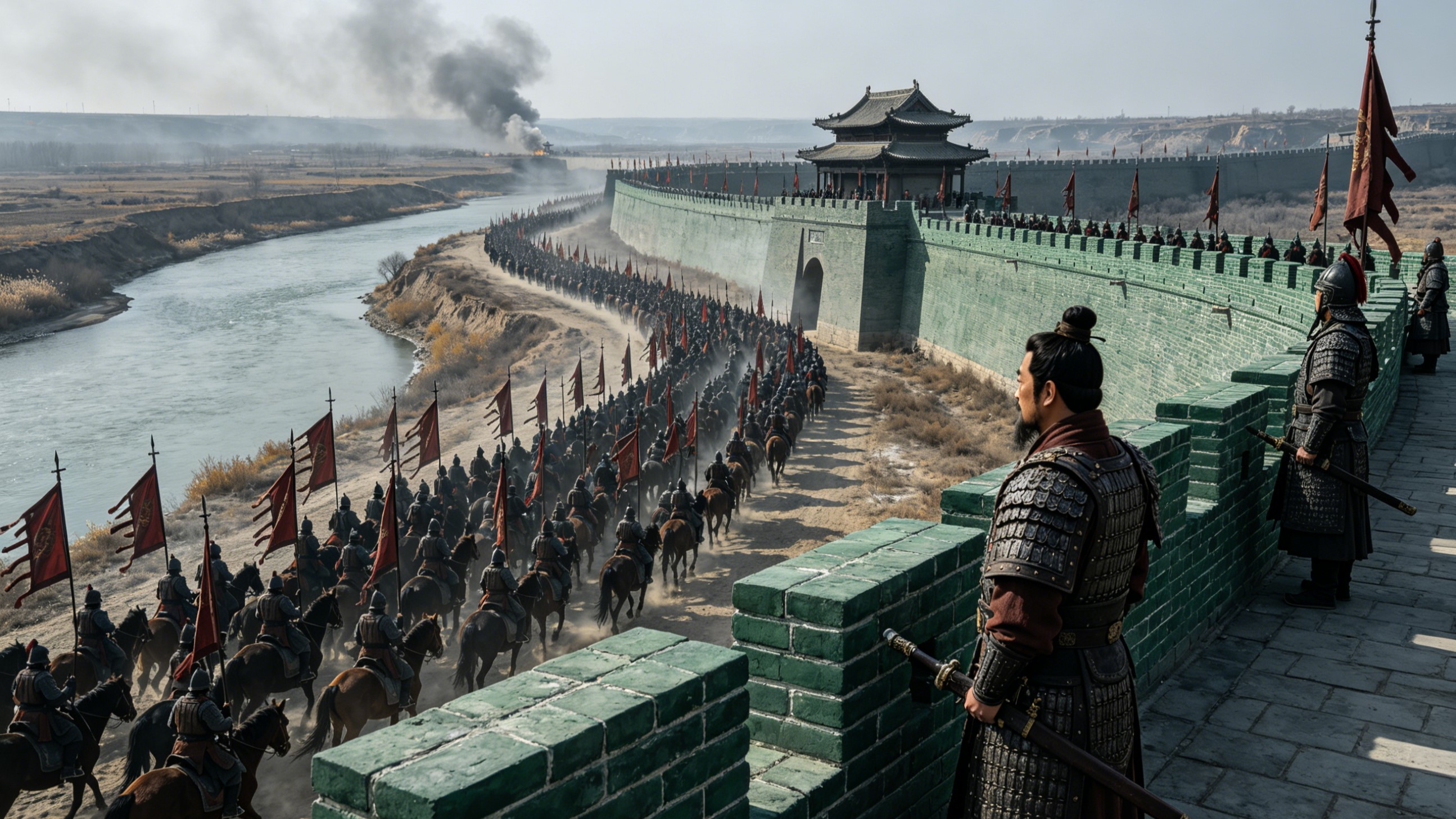
The generals answered with a resounding yes. In mid-October, Gao Huan swore an oath and marched south. A hundred thousand soldiers — a vast flood of iron and flesh — their banners blotting out the sun, their hooves shaking the very earth. Villagers along the road shut their doors in terror, and even stray dogs ran with their tails between their legs. These were true veterans: Xianbei cavalry, Han infantry, even hired mercenaries from the Western Regions — all merged into a gray torrent pouring toward the lonely fortress on the southern bank of the Fen River.
Yubi sat on a bluff where the Fen River turned. Its walls were faced with blue bricks, three zhang high and two zhang thick, with two gates facing east and west. Steep slopes and deep trenches surrounded it. The defending general was Wei Xiaokuan, just over forty, with a dark, weathered face and small, piercing eyes like a hawk's. When scouts reported that Gao Huan's army had crossed the Fen River, Wei was inspecting the walls. He stopped, gazed at the dust rising on the horizon, and gave a slight smile. "Gao Huan is coming," he said to his deputy. "Good. Let him come."
II. Countering Every Move
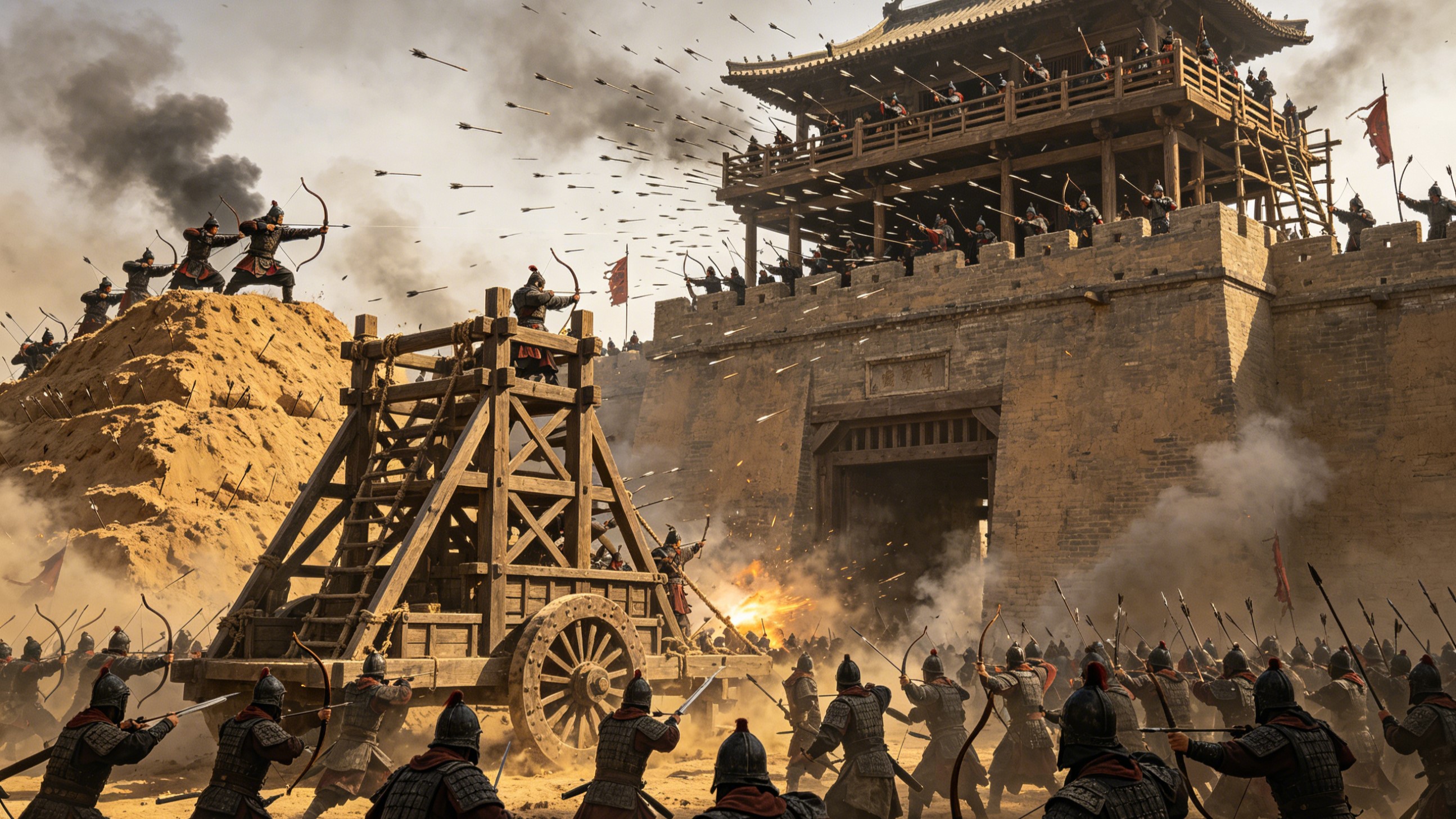
Gao Huan wasted no time. The day after his arrival, he ordered his soldiers to pile up an earthen mound south of the city. Over a thousand men carried dirt bags, building the mound higher each day. On the seventh day, it reached the same height as the city wall. Eastern Wei archers climbed the mound and rained arrows down on the defenders.
Wei Xiaokuan remained unruffled. He had long prepared large wooden beams. That night, his men built wooden towers atop the walls, each tower three zhang taller than the earthen mound. They covered the towers with wet oxhide to protect against fire and mounted heavy crossbows on the top floors. The next morning, when the Eastern Wei soldiers climbed the mound, they were met by a dense volley of arrows from the towers — steeper, more powerful, and aimed directly into the crowded mound. By noon, over three hundred bodies lay on the earth mound.
Gao Huan gritted his teeth and changed tactics. "Dig tunnels!" He ordered his best sappers to dig from all four directions toward the city walls. The tunnels were six chi wide and one zhang high. Soldiers crept forward in the darkness, the dull thud of spades against earth echoing underground. The plan was simple: hollow out the foundation beneath the wall, prop it up with wooden beams, then burn the beams — the wall would collapse.
But Wei Xiaokuan had anticipated this as well. He ordered a long trench dug along the inside of the city wall, and stationed his most alert soldiers there, their ears pressed to the ground. Whenever they heard digging beneath, they would dig back to intercept the tunnel. The moment an Eastern Wei soldier poked his head out, a gleaming blade was waiting — one by one, they were cut down, their blood seeping back into the tunnels. To make matters worse, Wei Xiaokuan had piles of kindling and dry grass thrown into the tunnels and lit, then fanned the smoke inward. The smoke choked the underground diggers, and their screams from beneath the earth made the Eastern Wei soldiers outside shudder. After half a month, Gao Huan had lost more than three thousand elite troops — not a single tunnel had succeeded.
Furious, Gao Huan deployed battering rams — massive iron-clad vehicles with rams as thick as roof beams, pushed by dozens of men. Each strike made the ground tremble. Wei Xiaokuan had huge cloth screens made and hung them outside the walls with ropes and iron rings. When the battering rams struck, the soft cloth absorbed all the force, like punching cotton — the wall didn't budge. Gao Huan switched to fire attacks, tying oil-soaked rags to long poles and lighting them to burn the screens. But Wei Xiaokuan's soldiers used iron hooks to catch the burning poles and yank them down — the flames fell back onto the Eastern Wei's own siege engines, setting them ablaze. Thick smoke rose as the enemy soldiers scattered in panic.
Fifty days passed. Gao Huan had tried everything — earth mounds, tunnels, battering rams, fire, even shooting surrender offers into the city with promises of high rank and riches. Each time, Wei Xiaokuan wrote his reply on the back of the letter: "I am a man of Guanzhong. I eat Western Wei's grain, not Eastern Wei's salary." Then he shot it back. Gao Huan trembled with rage when he read those words.
III. A Star Falls
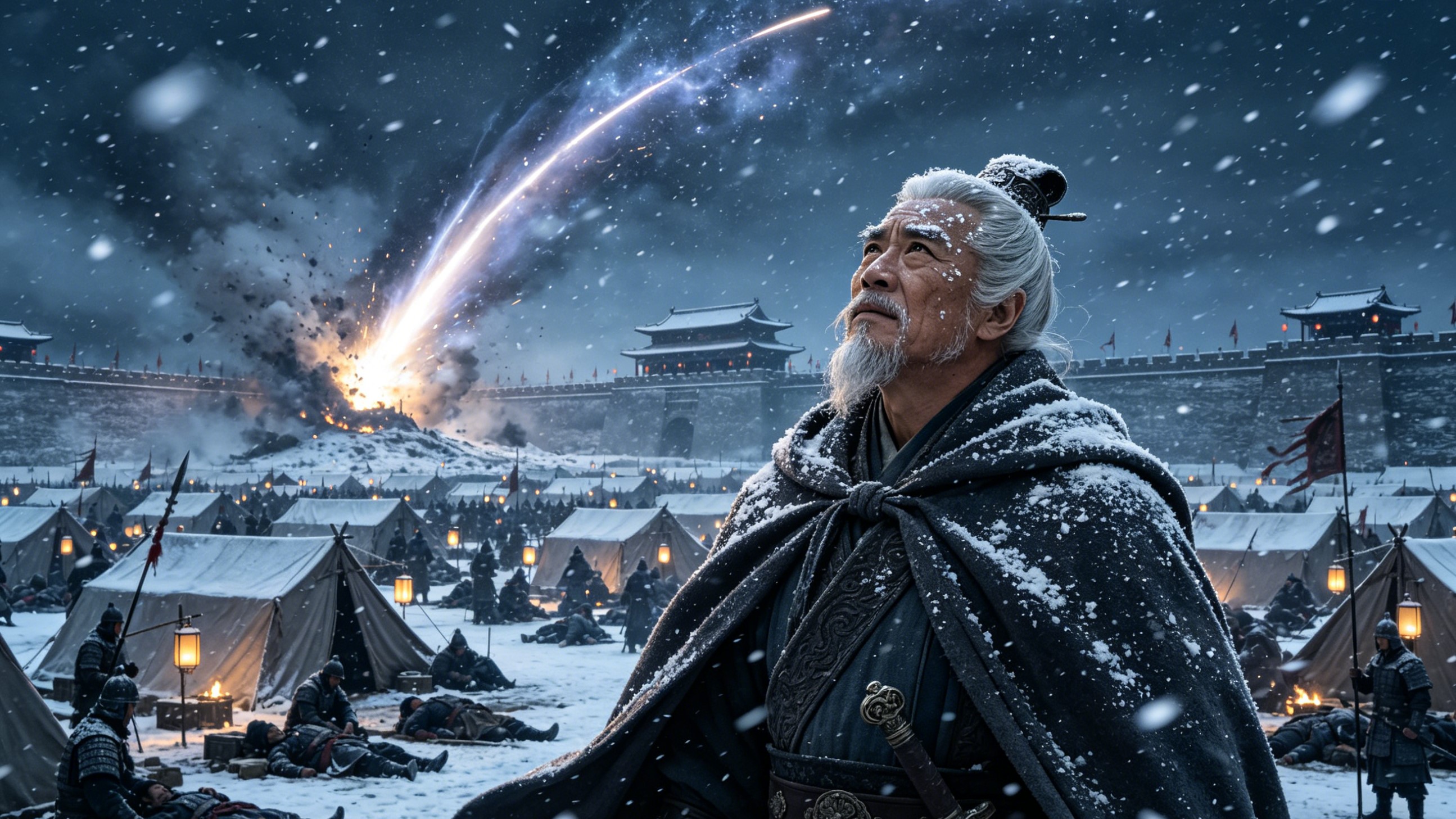
In late October, heavy snow fell and the wind turned biting cold. The Eastern Wei camp echoed with the endless moans of the wounded. Out of the original 100,000 men, over 70,000 had been lost. Food was running out. Worst of all, a plague had broken out — dozens of soldiers died of fever every day. Gao Huan could not sleep. Within a single month, his temples had turned completely white, his eyes sunken deep into their sockets, and a persistent cough racked his body.
One night, as he lay down to rest, a commotion broke out outside his tent. He threw on a coat and stepped out. A brilliant white light streaked across the sky — then an earth-shaking crash. A massive meteor had fallen in the northeastern corner of the camp. The ground shook; horses neighed and stamped. Gao Huan stood frozen, staring at the fading trail of the meteor. In ancient belief, a general's fate was tied to a star in the heavens. A falling star meant a great commander was about to die.
The next morning, Gao Huan found an arrow lying beside his pillow. Tied to its shaft was a piece of silk. He unrolled it: eight characters. "A single powerful crossbow shot — the evil body will fall." Wei Xiaokuan's handwriting. Gao Huan crushed the silk in his fist. He tried to stand, but a wave of dizziness swept over him, and he nearly collapsed. His attendants rushed to steady him — his hands were cold as iron, his lips blue.
"Order… the retreat," he whispered with his last strength. On the first day of November, the Eastern Wei army pulled back north. They abandoned countless wagons and sick, wounded soldiers along the way. Gao Huan lay in his carriage, listening to the wheels crunch over frozen mud. Occasionally he lifted the curtain and looked south — Yubi's outline grew smaller and smaller, finally disappearing into the gray sky. "I, Gao Huan, have fought all my life… yet I could not pass this little fortress," he murmured.
Back in Jinyang, Gao Huan's condition worsened. He knew the end was near. He summoned his eldest son, Gao Cheng, to his bedside. Gao Cheng knelt, tears falling. With great effort, Gao Huan raised a hand and patted his son's shoulder. His voice was hoarse: "After I am gone… keep my old generals… they will be sufficient." He gasped for air. "Hou Jing… you can never control him. I have left a letter for Murong Shaozong… do as it says when the time comes." Then he closed his eyes, and his fingers relaxed.
On the eighth day of the first lunar month, 547 AD, Gao Huan, Prince of Bohai and Grand Chancellor of the Eastern Wei, died in Jinyang at the age of fifty-two. It was said that another meteor streaked across the sky over Jinyang that day — this time in broad daylight. The Battle of Yubi became Gao Huan's final campaign. A tiny fortress with just over a thousand defenders, thanks to Wei Xiaokuan's ingenuity, had held firm against a hundred thousand soldiers and changed the course of the Northern and Southern Dynasties.
📖 Historical Note: The Battle of Yubi was one of the largest and bloodiest sieges between the Eastern and Western Wei. Wei Xiaokuan was ennobled as "Duke of Yubi" for his defense. After Gao Huan's death, the Eastern Wei was soon replaced by the Northern Qi, while the Western Wei evolved into the Northern Zhou, which eventually reunited northern China. The phrase "a star falls at Yubi" became an allusion for the tragic end of a hero.